Oil-based vs Water-based Asphalt Sealcoating: Pros and Cons and Common Applications
Maintaining pavement is a fundamental aspect of property management, infrastructure preservation, and civil engineering. First and foremost, asphalt sealcoating serves as a vital protective shield that defends driveway and parking lot surfaces from destructive elements like ultraviolet rays, heavy rain, snowmelt, and chemical spills. Without this critical protective barrier, the asphalt binder degrades rapidly, causing the surface to become brittle, fade to a dull gray, and eventually crack under physical loads.
This article explores the distinct properties of oil-based and water-based sealcoating materials, examining their pros, cons, and common applications. Choosing the correct sealer is not merely about aesthetic appeal; it is a critical financial decision aimed at maximizing pavement lifespan and deferring massive capital expenditures. As property managers globally seek to protect their physical infrastructure, the demand for high-quality protective coatings continues to expand. According to Intelmarketresearch.com, the global asphalt sealer market size was valued at USD 852 million in 2024.
The Foundations of Pavement Preservation
By definition, asphalt sealcoating involves applying a specialized liquid mixture over existing pavement to seal microscopic surface voids, lock down loose aggregates, and prevent water from penetrating the subbase. Regular application is critical because water intrusion is the leading cause of structural pavement failure. This is particularly true in regions prone to freeze-thaw cycles, where trapped moisture expands within subbase gravel, creating severe potholes, alligator cracking, and complete foundation shifting.
When discussing maintenance, the distinction between asphalt sealcoating and asphalt paving must be clearly understood. Paving is a heavy-duty construction process that involves excavating, grading, and laying down a brand-new foundation of hot-mix asphalt, typically required only once every fifteen to twenty years. In contrast, sealing is a non-invasive, surface-level maintenance technique that should be performed every two to three years to preserve that expensive paving foundation.
Deep Dive into Oil-Based Sealcoating
Oil-based sealcoating products are formulated using petroleum-based solvents and asphalt cement. These active ingredients allow the sealer to penetrate deep into the existing pavement structure, replenishing the natural oils that the asphalt loses over years of sun exposure, oxygen contact, and oxidation.
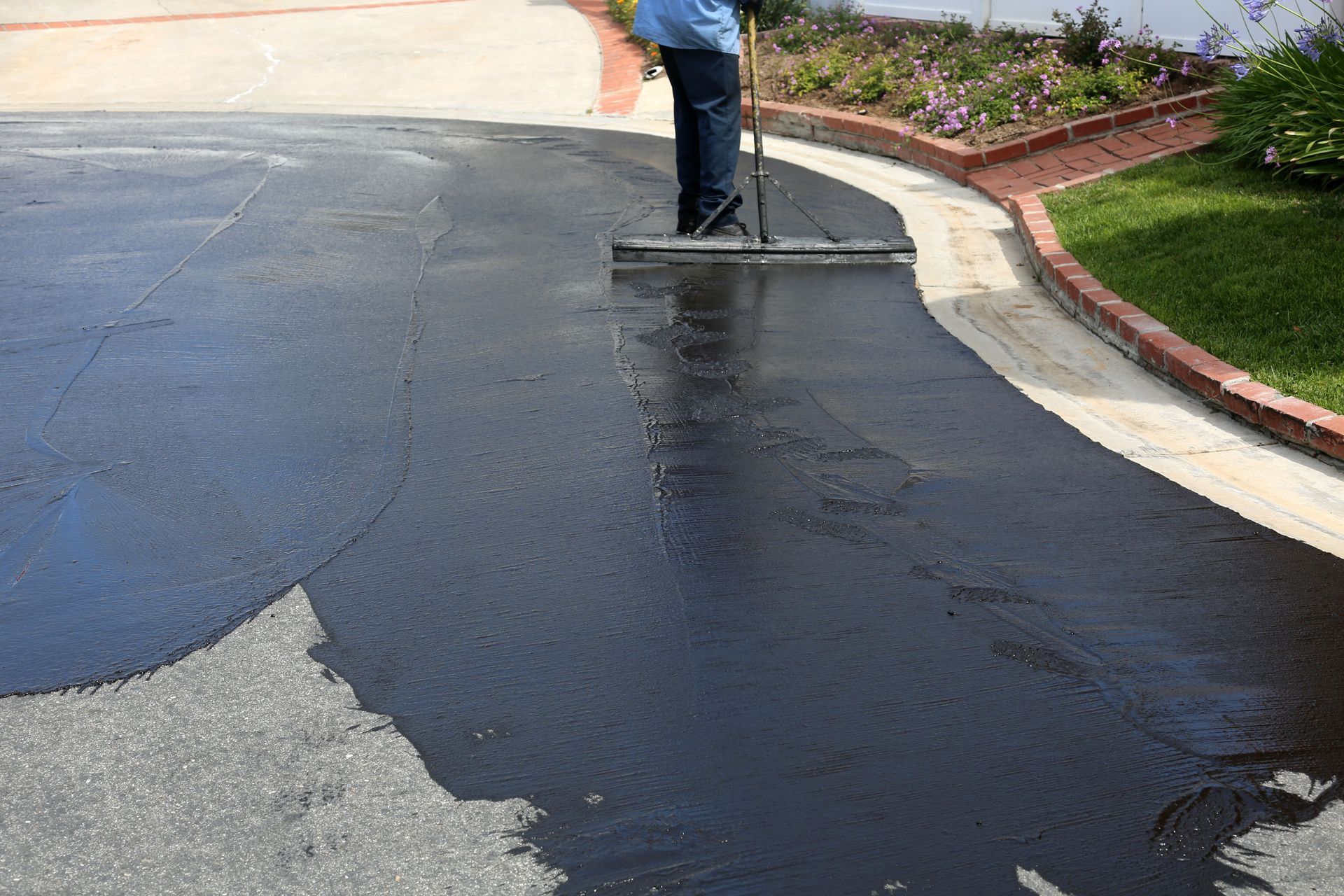
The specific application process for oil-based asphalt sealcoating requires specialized spray equipment, high-pressure pumps, and clean, dry weather. Because it is highly dependent on solvent evaporation to cure, the ambient temperature must remain consistently warm, ideally above fifty degrees Fahrenheit, without any threat of rain for twenty-four hours. Technicians must wear specialized personal protective equipment (PPE), including respirators and protective clothing, to limit their exposure to the strong fumes released during application.
The primary benefit of oil-based sealers is their extreme durability. Because the petroleum solvents bond chemically with the underlying asphalt, they do not simply sit on the surface; they become an integral part of the pavement itself. This deep bond provides excellent resistance to oil, gasoline, diesel, and chemical leaks, making it the preferred choice for high-traffic commercial parking lots, bus terminals, gas stations, and industrial loading docks. Typically, a professionally applied oil-based sealer can last up to four or five years.
However, these performance benefits come with significant drawbacks. The high VOC content makes oil-based sealers less environmentally friendly, and their use is increasingly restricted or banned in several green-certified municipalities. Additionally, because of the fluctuating cost of crude oil, these products generally carry a higher upfront material cost. For properties where environmental compliance is a priority, these chemical factors often outweigh the material's structural longevity. Property owners must weigh these regulatory hurdles carefully against the undeniable mechanical strength and waterproofing capabilities that only a petroleum-based formula can deliver.
Deep Dive into Water-Based Sealcoating
Water-based sealcoating utilizes water as the primary carrier liquid, suspending asphalt or coal tar emulsions along with polymer additives and fine silica sand. The inclusion of sand is crucial, as it provides excellent traction and slip resistance, preventing slick surfaces when wet.
When applying water-based asphalt sealcoating, the liquid carrier evaporates into the air, leaving behind a highly stable, protective film. This drying process is highly efficient and less sensitive to minor shifts in humidity, allowing for a broader application window compared to oil-based alternatives. Cleanup is incredibly simple, requiring only water before the sealer fully cures, which minimizes labor costs and shortens project timelines.
The most significant advantage of water-based products is their minimal environmental footprint. With exceptionally low VOC emissions and virtually no harsh chemical odors, these sealers are safe to apply near schools, retail centers, residential driveways, and hospitals. They comply fully with the strictest environmental regulations and green building standards, making them the standard choice for modern municipal projects.
The trade-off for this eco-friendly profile is a slightly reduced lifespan. Because water-based sealers form a protective barrier on top of the pavement rather than penetrating deep within it, they are more susceptible to friction wear from snowplows and heavy traffic. Typically, a water-based sealer requires reapplication every two to three years. However, continuous advancements in polymer technology are closing this durability gap, allowing modern water-based formulas to deliver competitive resistance to automotive fluids and physical wear at a lower price point. These ongoing scientific innovations make water-based emulsions an increasingly attractive and cost-effective option for both residential and light commercial pavement maintenance.
Direct Comparative Analysis
In terms of climatic variables, asphalt sealcoating performance depends heavily on temperature and sunlight. While oil-based sealers offer a deep, glossy black finish that highlights the natural texture of the stone, water-based sealers dry to a clean, uniform matte-black appearance. This aesthetic difference is highly subjective; commercial managers often prefer the rich sheen of oil, while residential homeowners favor the subtle, clean look of matte. Carefully evaluating these functional and visual parameters ensures your pavement remains fully protected and visually appealing.
Ultimately, the best choice depends on your specific environment. High-traffic industrial areas with frequent fuel spills require the chemical resilience of an oil-based sealer. Conversely, neighborhood associations, park paths, and suburban driveways are better served by the safe, low-odor, and cost-effective nature of water-based emulsions.
Common Application Strategies and Execution
To achieve a successful application, proper site preparation is critical, regardless of which chemical base is chosen. Before applying any asphalt sealcoating product, the surface must be meticulously cleaned of all dirt, dust, loose gravel, and vegetation. Any existing cracks larger than a quarter-inch must be filled with a hot-pour crack sealant to prevent moisture intrusion. Additionally, any oil spots must be primed with specialized latex-based primers; otherwise, the new sealer will fail to adhere to the contaminated surface, causing premature flaking.
Furthermore, property managers must carefully consider the logistics of the application. Water-based sealers typically dry much faster, allowing traffic to resume within twenty-four to thirty-six hours after application. Oil-based products may require forty-eight to seventy-two hours of curing time before they can withstand the weight of heavy vehicles.
Coordinating this downtime is crucial for commercial entities to avoid disrupting daily business operations. Planning the project in phases allows half of a parking lot to remain open while the other half is treated, keeping traffic flowing smoothly.
Ultimately, investing in regular asphalt sealcoating is the most cost-effective way to defend your pavement against structural failure and avoid premature paving expenses. While oil-based sealers offer unmatched deep-bonding durability for industrial spaces, water-based emulsions provide an eco-friendly, fast-curing, and highly customizable alternative for sensitive public areas. Balancing these pros and cons is essential for a successful maintenance plan.
When you are ready to secure your property with premium, long-lasting surface protection, trust the professional paving crew at Gierach's Grading & Paving Inc. Contact Gierach's Grading & Paving Inc today to schedule your custom property evaluation and extend the life of your asphalt.
Share On: